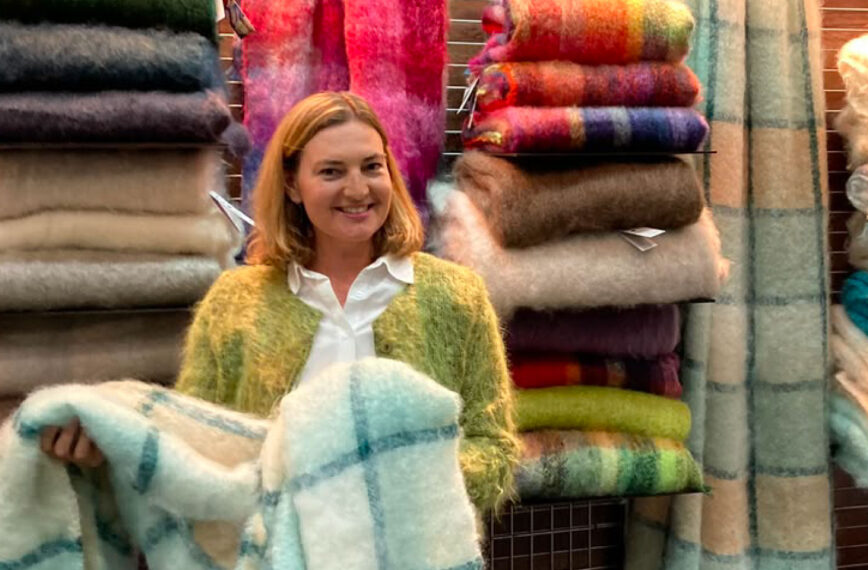
Mohair is a wonderful fibre. It’s strong, resilient, has a natural sheen and is a renewable fibre. The Angora goats are sheered twice a year, allowing the goats to grow their hair back in time for winter. Roughly 72% of the worlds mohair production comes from South Africa (including Lesotho), whereas the Eastern Cape is the largest mohair producing area in the country. As one of the five noble fibres in the world, mohair is sometimes called the diamond fibre. It’s luxurious feel certainly makes mohair live up to its name!
Where Our Mohair Comes From
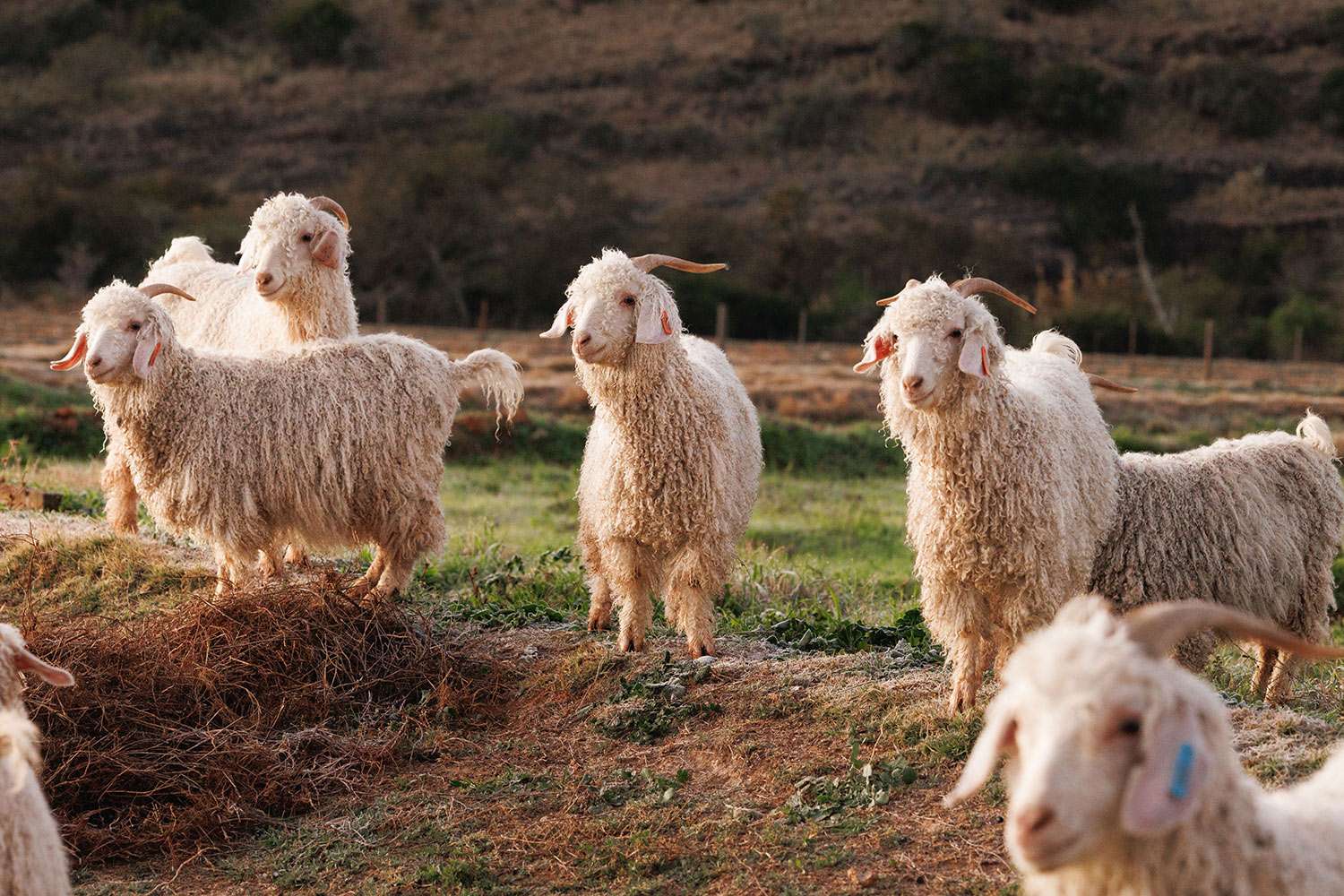
All mohair production starts with Angora goats raised on farms across the Eastern Cape. These are mostly not industrial scale operations. They’re family-run, free-range herds that graze on mixed natural pasture—grass, karoo scrub and indigenous herbs.
Conditions in the Eastern Cape are near-perfect for healthy goats. Plenty of sunshine, dry winters and a landscape that enables the animals to move freely. The result is a fleece of exceptional lustre, strength and softness.
When it comes to sourcing mohair, we strictly adhere to purchasing mohair that has the RMS (responsible mohair standard) certification. These are standards that have been set out by the Mohair board, ensuring fair trade and ethically sourced fibre. This ensures that farmers get the best prices for their mohair and that workers are paid fair wages. These standards also speak to animal welfare for the goats.
Why Mohair Is Naturally Sustainable
Mohair is renewable and biodegradable.
- Renewable:Angora goats are shorn twice a year. The fleece grows back naturally, without the need for fertilisers, pesticides or irrigation on a scale that damages the land.
- Biodegradable:At the end of its long life, pure mohair will break down naturally. It leaves behind no harmful elements like microplastics, unlike synthetic fibres.
- No synthetic blends:Our blankets, scarves and jackets are made from 80% mohair, 16% wool and 4% nylon. We have carefully chosen natural blends as far as possible to ensure that the product will last for many years to come.
- Long-wearing:Mohair’s natural strength means a well -cared for item outlasts its synthetic counterpart by decades. That means less waste and value for money.
- Colouring: Because mohair is a protein fibre, it takes to dye beautifully without requiring heavy chemical baths—a small but meaningful advantage in reducing water pollution.
Eco-Sensitive Production at Barnard Mohair
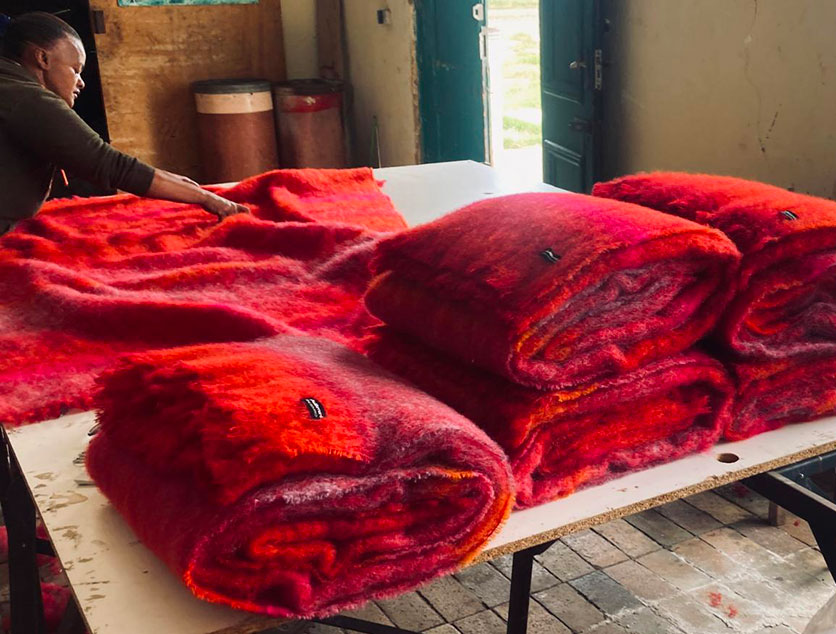
Our factory in Alicedale is purposefully small and deliberately slow. Every piece is crafted by local women from the area, all of whom have spent years perfecting their craft.
We process mohair with care for the people making it and the environment around us:
- No harsh chemical finishes: we avoid unnecessary treatments that could harm workers or waterways.
- Low-waste cutting and sewing: offcuts are reused where possible, which we make in small batches to match demand.
- Air-drying and hand-finishing: we use sunlight to dry all hanks and blankets that are piece dyed. Most finishing steps of the manufacturing process rely on human hands.
- Natural colours and classic designs: we favour undyed shades and timeless designs that never go out of style.
|
Crafted to Last: Heirloom Quality vs. Fast Fashion
Fast fashion treats textiles as short lived and disposable. Mohair lasts a lifetime.
At Barnard Mohair, we are so confident in our quality, that a blanket produced for daily use, will still be passed down to future generations. We still hear from customers whose parents bought a throw or curtains in the 1970s—and their kids have inherited it.
It’s an investment in natural luxury that grows gentler with time. When you choose a well-made mohair garment or blanket, you step off the track of cheap, short lifespan synthetics, into something lasting.
Buying better means supporting local, and supports the livelihoods of rural Eastern Cape families—from the goat keeper to the women running the factory. You purchase helps keep these time honed skills alive, here in Alicedale for future generations.
Animal Welfare and the Angora Goat
We’re often asked about animal treatment. It’s a fair question, and the answer matters deeply to us.
Angora goats in the Eastern Cape roam the mountains and the Karoo landscape freely. They’re never kept in confinement, and only brought in for shelter under stormy or cold conditions. Farmers care deeply about their herds, and making sure the animals are safe and looked after.
Shearing happens twice a year, carried out by skilled handlers who use gentle restraint—never causing harm to the animal.
Healthy goats mean excellent mohair. That’s been true for generations. Farmers who care deeply for their herd, see it in the quality of the clip. There’s no upside to poor animal welfare, and the close-knit farming community here don’t tolerate it.
Mohair SA, the industry body, promotes and enforces the highest standards of care—and our local farmers abide by those guidelines without exception.
From our Home to Yours
Mohair is more than a fibre. It’s a connection to a landscape, a way for living, a way of farming and a set of values we’ve held since 1967. When you choose Barnard Mohair, you’re choosing a piece of history, a piece of the Eastern Cape—responsibly sourced, lovingly made, and meant to last.
Explore our full collection of sustainable mohair products online.